

Most investors fixate on the visible fee — the 1% AUM charge on a quarterly statement — and miss the larger cost sitting quietly underneath it: years of generic, one-size-fits-all guidance that never adjusts to what actually moves a portfolio's outcome.
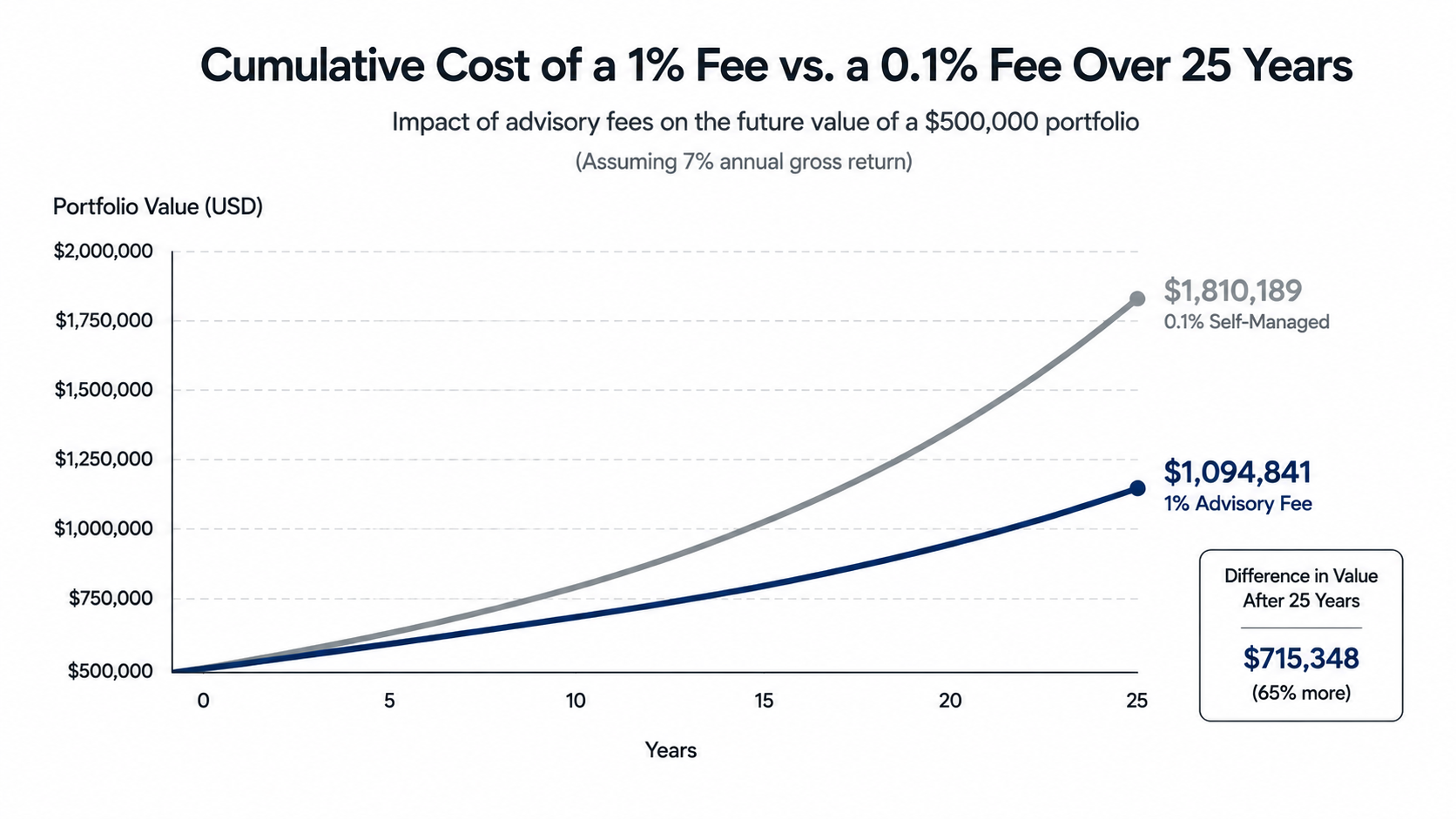
A 1% annual fee sounds small until you compound it. On a $500,000 portfolio held for 25 years, the difference between paying 1% and paying roughly 0.1% in a low-cost, self-managed structure can run into the hundreds of thousands of dollars — not because the advisor did anything wrong, but because fees compound against you exactly the way returns compound for you.
Research popularized by Vanguard's own investment strategy group over the past decade has tried to quantify what advisors are actually worth beyond the fee — behavioral coaching, rebalancing discipline, and tax-location decisions. Their own estimates put realistic "advisor alpha" well below the fee most advisors charge, once you strip out the parts an informed self-directed investor can do for themselves.
What a fee actually buys you — and what it doesn't
The honest case for a human advisor rests on behavior, not stock-picking. The dishonest version of the pitch conflates the two.
Morningstar's long-running "Mind the Gap" research has repeatedly found that the average investor earns meaningfully less than the funds they hold, purely because of poorly timed buying and selling. That behavior gap is real, and a good advisor genuinely helps close it for people prone to panic-selling in a downturn.
But behavioral coaching is a specific, teachable skill — not a blanket justification for paying an ongoing percentage fee on every dollar you own, including the portion sitting in bonds, cash-equivalents, and index funds that require no active management at all.
"The value of financial advice is heavily concentrated in behavioral coaching and tax efficiency — not in beating the market."
Vanguard Investment Strategy Group, paraphrased from public "Advisor's Alpha" research
None of this means self-management is right for everyone. If you know you'll sell in a panic, or you genuinely don't have the time or interest to run your own process, a fee-only fiduciary can be worth every basis point. This isn't an argument against advisors — it's an argument for knowing exactly what you're paying for before you sign up for it indefinitely.
The Guide walks through the fee-audit math, a practical allocation framework, and the specific behavioral checkpoints that replace what a coaching-focused advisor provides. Get your copy below — built from years of studying where DIY portfolios actually go wrong.
The framework in this guide isn't a promise of better returns — nobody can promise that, and anyone who does is selling something. It's a structure for making fewer avoidable mistakes, understanding exactly what you're paying and why, and building a process disciplined enough to survive the years the market makes that discipline hard.